The Execution Gap
This article highlights the “execution gap,” where companies have strong strategies for AI and cloud transformation but fail to turn them into real outcomes due to fragmented systems, slow processes, and operational complexity. It argues that success depends not on more planning but on effective execution—simplifying infrastructure, improving delivery speed, and aligning teams to move from strategy to results faster.
The Execution Gap
AI & Data Analytics
The Execution Gap
Most companies do not fail because they lack strategy. They fail because strategy never becomes operational reality. That is the execution gap.
Across the market, DevOps leaders, CTOs, and platform teams are not struggling to come up with a point of view on AI, cloud modernization, or delivery transformation. They already have one. They have decks, roadmaps, executive alignment, budget conversations, and architecture diagrams. In many cases, they even have the right vendors and the right platforms.
What they don't have is momentum.
The result is a common pattern: AI initiatives stall in pilot mode; cloud environments grow more fragmented as they scale, and engineering teams spend more time navigating complexity than shipping outcomes. The strategy is usually sound. The execution model is what breaks.
This matters because most organizations are still trying to solve an execution problem with more strategy. They commission another assessment. They hold another planning session. They produce another transformation roadmap. But when delivery is slow, environments are inconsistent, and teams are working across disconnected systems; better planning alone does not create movement. Execution does.
The Illusion of Strategy
A notable advisor from Gartner and one of the foremost PPM professionals in the industry once said: ‘Projects implement strategy’. They implement a strategy you need to have already created. It is easy to mistake strategic intent for operational readiness.
- Scenario: An organization says it is “AI-first,” but its data is scattered across business units, systems, and clouds.
- Scenario: A leadership team commits to platform modernization, but engineers are still wrestling with legacy dependencies, one-off environments, and deployment friction.
- Scenario: A company invests in Azure, yet the day-to-day reality is a patchwork of tools, handoffs, and bottlenecks that slow every release.
From the outside it can look like transformation is underway simply because the strategy exists. From the inside, the truth is different. Teams are stuck in the gap between what the business wants to become and what the infrastructure actually allows them to do. That is why so many companies look aligned in the boardroom and stalled in production.
Foundation Is the Constraint
Nowhere is this more visible than in AI. Most AI programs do not fail because the models are weak. They fail because the foundation underneath them is not ready. Data lives in silos. Security and governance are inconsistent. Environments are fragmented across teams. Integration paths are unclear. The result is predictable: ambitious AI strategy on paper, limited execution in practice.
That is why cloud foundation matters so much. Platforms like Azure help organizations unify data, standardize infrastructure, and create scalable environments that can support real workloads instead of isolated experiments. With PaaS solutions like PostgreSQL on Azure, and server infrastructure that can be reliably spun up on demand, organizations can reduce fragmentation and standardize their operating base.
But foundation alone is not enough.
A well-architected environment does not create speed by itself. Tools don’t solve the problem on their own. Even the right cloud platform will underperform if teams cannot move from design to deployment with a solid process. Infrastructure does have to be there…but execution is the multiplier.
What the Execution Gap Actually Looks Like
The execution gap is not abstract. It shows up in specific ways. It shows up when strategic priorities outrun the team’s ability to implement them. It shows up when delivery cycles stretch because every release depends on too many manual steps, too many dependencies, or too much tribal knowledge. It shows up when the toolchain becomes so complex that engineering spends more time managing the environment than moving the business forward.
For DevOps leaders, this often creates a painful disconnect. The mandate is clear: move faster, modernize the stack, enable AI, improve reliability, and deliver measurable outcomes. But the operating reality is slower than the ambition. Teams inherit fragmented systems, uneven standards, and competing priorities. The roadmap says acceleration. The architecture says caution. Hence the gap.
In today’s market, it is more than an internal efficiency problem. It is a competitive problem. Companies that can execute faster learn faster. They deploy faster. They realize value sooner. They create organizational confidence because the business sees progress, not just potential.
Why Execution Needs a Partner
This is where most firms make a second mistake: they assume execution is simply a matter of working harder internally. In reality, execution acceleration usually requires a combination of architecture discipline, platform simplification, deployment rigor, and delivery experience that many organizations do not have in concentrated form. Not because their teams are weak, but because internal teams are already carrying operational load while trying to transform the system at the same time.
And this is where the right partner matters.
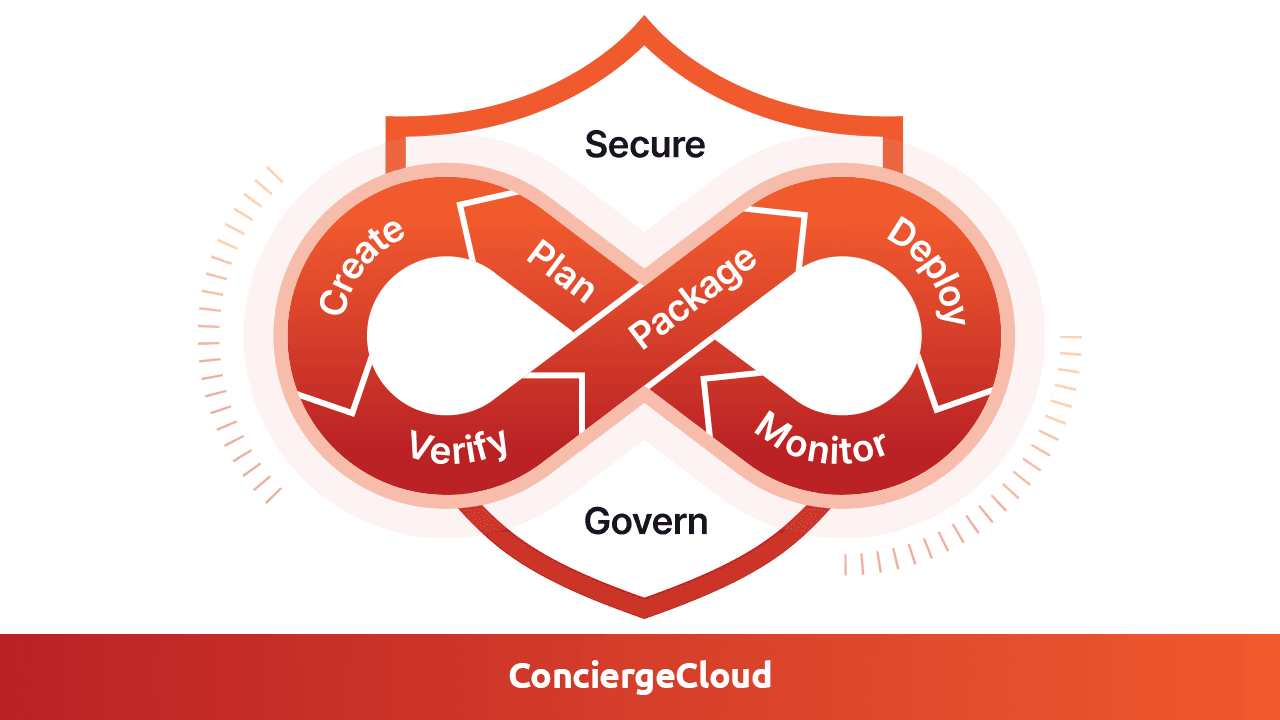
Ntegral, through ConciergeCloud, is built for this exact problem. Not as another strategy layer, and not as a product that sits on the sidelines, but as an execution accelerator that helps organizations turn cloud and AI ambition into operational progress. We can implement the strategy.
It means that it helps teams simplify environments, reduce friction, and move from fragmented infrastructure toward a more repeatable, scalable operating model. It means bridging the space between executive strategy and engineering reality. It means making sure the stack, the delivery process, and the business objective are moving in the same direction. In practical terms, that is how you increase velocity. Not by adding more noise. Not by adding more tools for the sake of tools. And not by treating transformation like a branding exercise. By executing.
Know more about ConciergeCloud- https://www.ntegral.com/insights/cloud-migration-doesnt-have-to-be-expensive
Velocity Is the Differentiator
The companies that win the next phase of cloud and AI adoption will not be the ones with the most polished strategy documents. They will be the ones that can operationalize strategy faster than their competitors. They will have cleaner foundations, simpler environments, tighter delivery loops, and a clearer path from decision to deployment. They will treat execution as a core capability, not an afterthought. And they will understand that speed is not recklessness. It is the result of alignment, discipline, and removing friction. That is the real lesson of the execution gap. Strategy is rarely the missing piece. Execution IS.
For DevOps leaders and decision-makers, the question is no longer whether the strategy exists. In most organizations, it already does. The real question is whether the business has the operating model to turn that strategy into outcomes at speed.
That is where advantage is created now.
See other insights
You may also enjoy these additional related insights
Drive results faster, smarter, and more efficiently.

Cloud migration to Azure doesn’t have to be costly. Discover how ConciergeCloud helps streamline adoption while optimizing spend and accelerating innovation.