Data Analytics
Cloud Computing Providing Data Driven Results for Volleyball
The complexity of volleyball requires strategic analysis of data and statistics. How coaches go about collecting their data can be a struggle and very time-consuming.
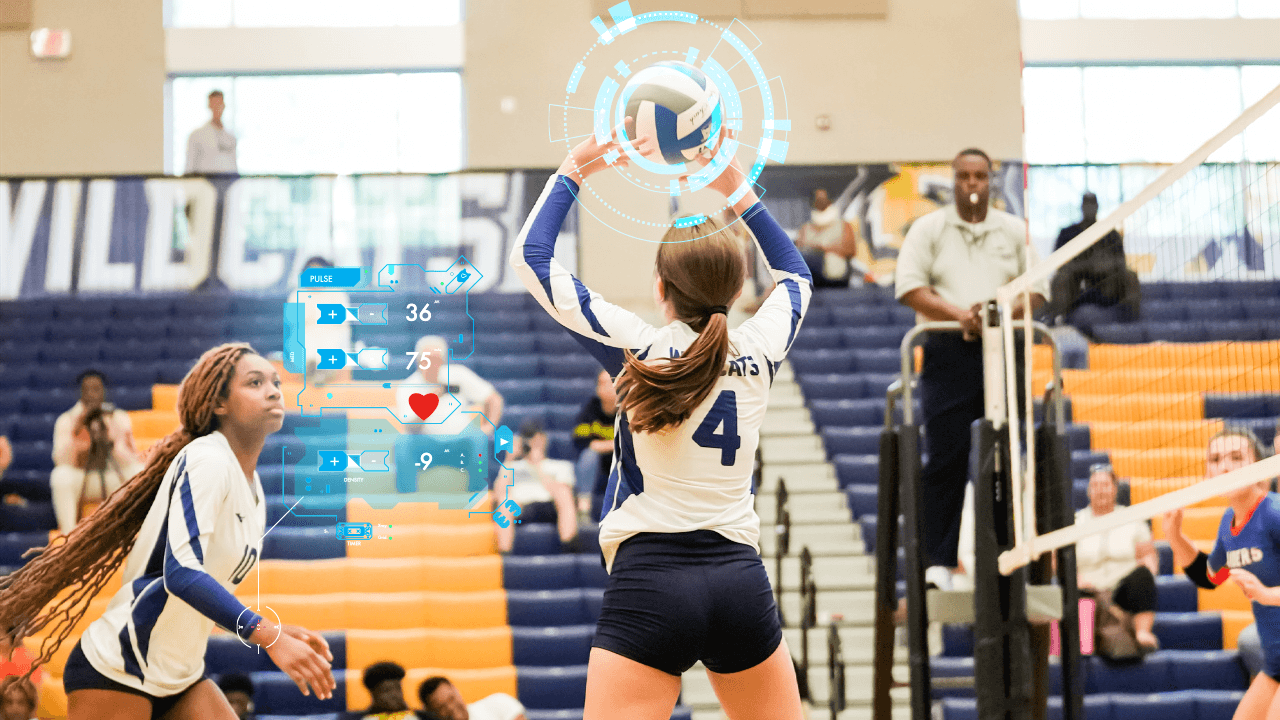
Volleyball is enjoyed by 37 million + players in the United States (more than any team sport except basketball) and more than 800 million globally, making it the world's most popular participant sport. Apart from the serve, a player may never wholly control the ball; it's a rebound sport. Therefore, it is critical to be in the correct position at the precise moment before contact. Some people might not realize it, but volleyball is a "movement" sport, which means that players need to have excellent movement skills with their entire body. This sport is so exciting to watch; you never know what will happen next. The ball and players are always on the move. It is one of the most competitive team sports in America due to its statistics-driven nature.
Summary Volleyball’s speed and movement demands precise positioning and timely decisions, but manual stat tracking and film review are too slow and incomplete for in-game adjustments. Sensor-enabled balls and wearables, paired with cloud computing, can deliver real-time motion and performance analytics, producing actionable scorecards between sets. This data-driven approach empowers coaches and athletes to communicate, adjust immediately, and improve outcomes. Ntegral provides packaged cloud solutions that make these insights accessible and scalable.
The complexity of volleyball requires strategic analysis of data and statistics. How coaches go about collecting their data can be a struggle and very time-consuming. Volleyball consists of a group of sets within a match, best 2 of 3 sets or best 3 of 5 sets per match. During each set, coaches collect statistics on athletes' performance. Below is an example of what coaches track. Note that it takes work to manually gather and track all data for a team of 12-15 players. Let alone have the time to implement the recent analysis of your data to the team. Nevertheless, gathering such data is beneficial because sometimes perceptions of how the game went can be very different from what happened in a game statistically.
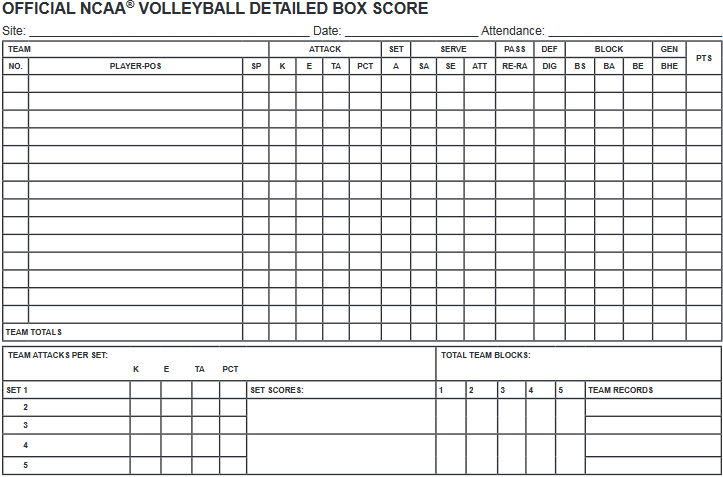
Once the above data is collected via paper/pencil, this valuable information will be able to be computed by coaches later. Unfortunately, there is no time to calculate and analyze these statistics during the 2-3 mins between each set. We didn't get to the important part; what about the physical positioning of each player on the court? Was each player in the correct base, defense, or offense positions? Did they cover their hitters and blockers or move their feet properly when transitioning into their next position? Our old-school methods need to consider how the players use the court. A common way would be to watch films from past matches. Watching the film has fantastic benefits to the overall volleyball program and allows individual players to see themselves in a full-circle environment. Re-watching for capturing statistics is less accurate than you'd think, and it's verytime-consuming. Imagine if there was a scorecard computed for you with real-time series data. In the short 2-3 min in between sets, each athlete could review their scorecard and be able to discuss as a team. Opening teams to discussions about the following action steps is where the magic happens; winning comes from a team's ability to communicate effectively!
Tracking devices built inside a volleyball could provide valuable andup-to-date data. This analysis could give information about certain in-game situations. It could show trends in how players contact the ball offensively and defensively. Every team and athlete has their own tempo, style, goals, and play setups for executing their game. Knowledge of time series data can give insights into the team's ability to follow the ball's overall movement. Wearable technology for players could measure the mechanics of each athlete's range of motion, posture while performing specific skills, and even muscular movements. Benefits from motion data can detect accelerations and changes of direction. These analytics can show strengths and weaknesses, allowing athletes to adjust immediately to achieve better ball play results.
With the advent era of big data, people now have higher requirements for information, knowledge, and technology. By utilizing Cloud Computing (CC) and motion tracking devices, coaches, athletes, and teams can achieve accurate live informative data on improving themselves after every set and match. CC integrates and summarizes informative and technical resources to their users in real-time information, knowledge, and technology requirements; it's all at their fingertips. No sideline math in between sets, and no multi-coach stats gathering is needed. Instead, coaches can get back to doing what they do best, coaching. With better solutions, resources, and tools integrated with cloud computing, volleyball participants can receive the most up-to-date information. CC enables volleyball coaches and athletes to draw the correct conclusions based on the most reliable and timely data their team generates. Data-driven scorecards can empower volleyball athletes around the world to the next level.
To own the court, you must first call it; to earn it you must call it, touch it, play it. As a volleyball coach myself, stats don't lie.
Ntegral makes "what" you do in the cloud easier. We offer packaged solutions to empower your digital transformations. Below is a glimpse of our optimized offerings. Contact us today at success@ntegral.com to start your journey in the cloud!
Jupyter Hub for Data Science on Ubuntu Desktop Presto on Azure Trino on Azure InfluxDB 2.0 on Ubuntu 20.04 LTS Presto on Oracle Microsoft SQL Server Express for Ubuntu:18.04 Azure Data Science Hub - DSVM GUI on Azure Data Science Hub - DSVM Thank you for your interest.
Share our insights with your network
Frequently Asked Questions
Question: Why aren’t traditional stat tracking and film review enough for in-game adjustments in volleyball? Short answer: Volleyball is a fast, movement-heavy “rebound” sport, and the 2–3 minutes between sets aren’t enough to compute and interpret paper stats or rewatch film. Manual methods are slow, incomplete in real time, and can be less accurate when reconstructed from video. Real-time analytics solve this gap by delivering immediate, objective insights that coaches and athletes can act on between sets.
Question: What kinds of insights can sensor-enabled balls and player wearables provide? Short answer: They can capture time-series motion and performance data—such as ball-contact trends on offense and defense; player positioning in base, defensive, and offensive systems; coverage and transition movements; and individual mechanics like range of motion, posture, and muscular activation. They also detect accelerations and changes of direction, revealing strengths and weaknesses so athletes can adjust right away.
Question: How does cloud computing turn all this motion data into actionable outcomes during a match? Short answer: Cloud computing integrates, processes, and summarizes live sensor streams into real-time scorecards that are accessible on the sideline. Instead of doing math or coordinating multiple stat-takers, coaches receive timely, reliable metrics at their fingertips, enabling immediate communication and tactical changes that match the speed and complexity of volleyball.
Question: What is a “data-driven scorecard,” and how is it used between sets? Short answer: It’s an automatically computed snapshot of each athlete’s and the team’s performance and movement patterns during the set. In the brief 2–3 minute break, players and coaches can review these objective metrics together, align on adjustments (e.g., positioning, coverage, tempo), and enter the next set with clear, communicated action steps.
Question: How can Ntegral help us implement this kind of real-time analytics? Short answer: Ntegral provides packaged cloud solutions that make these insights accessible and scalable—so coaches can focus on coaching. Offerings include JupyterHub for Data Science on Ubuntu Desktop, Presto and Trino on Azure, InfluxDB 2.0 on Ubuntu 20.04 LTS, Microsoft SQL Server Express for Ubuntu, and Azure Data Science Hub (with GUI). These tools support data ingestion, time-series analysis, fast querying, and collaborative analytics workflows. To get started, visit ntegral.com or contact success@ntegral.com.